Biotech Funding Environment: Post-IPO Window Analysis | LeverVenture
When the biotech IPO window is shut, capital doesn't disappear — it changes shape. Which financing instrument a company reaches for is itself diligence.
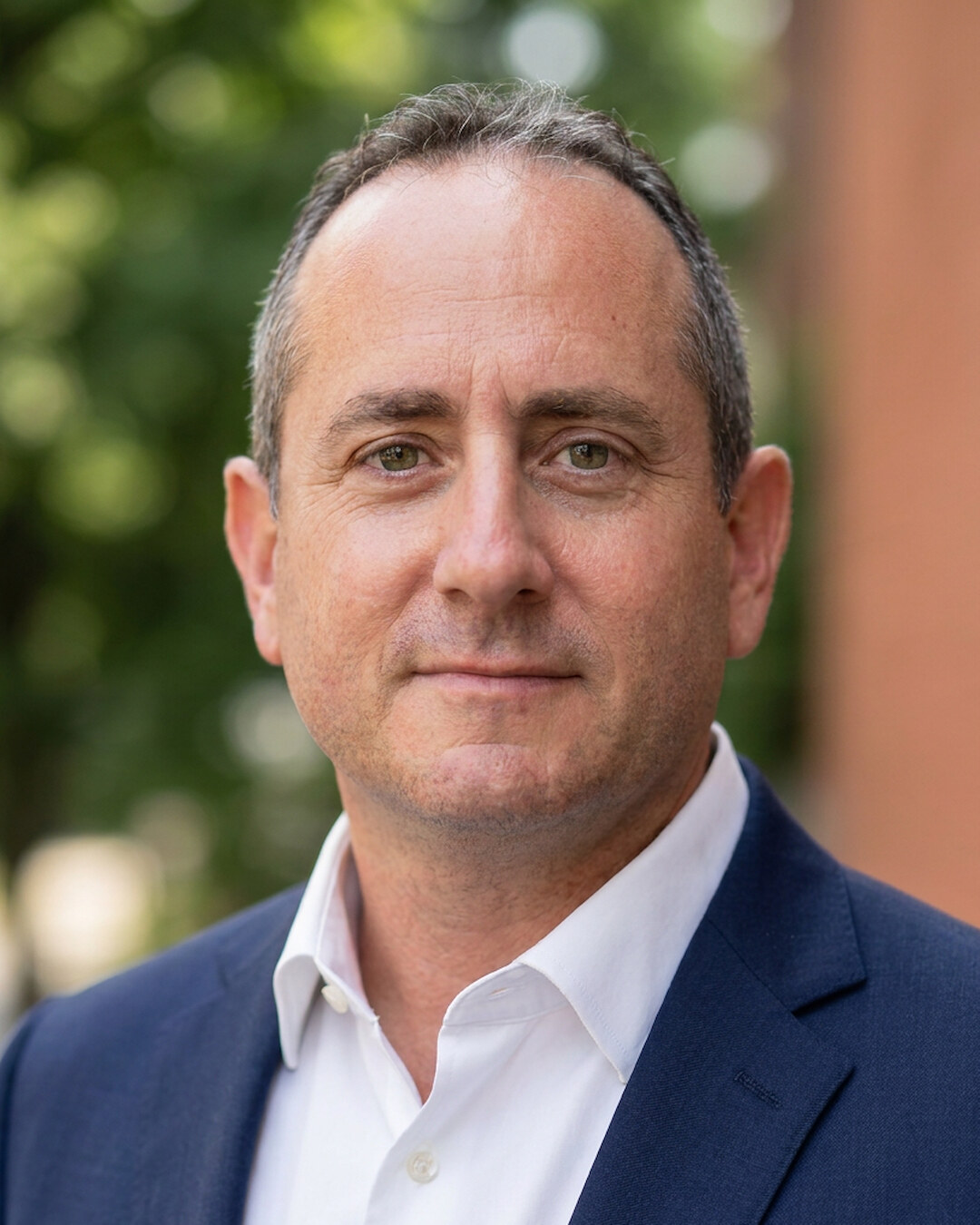 By Peleg Chevion, Managing Partner
5 min read · Life Sciences and Healthcare
By Peleg Chevion, Managing Partner
5 min read · Life Sciences and Healthcare
In this note06 · 5 min
The public market has not been a dependable financing venue for biotechnology companies since the retrenchment that began in 2022, and the IPO window has reopened only in narrow, selective bursts since. That does not mean capital has stopped flowing into the sector. It means the instruments have changed shape. A company's choice of financing vehicle when equity markets are closed reveals as much about its underlying quality as its pipeline does, and growth equity investors who underwrite only the science are pricing off half the information available to them.
Four structures have absorbed the volume that would once have gone to a Nasdaq debut: crossover rounds that price a private company as though it were already public, royalty monetization and structured debt that convert future product revenue into present capital without diluting equity, reverse mergers into dormant public shells, and partnering deals structured explicitly as financing rather than simple licensing. Each carries a different signal about company quality, and each imposes a different cost on the company that reaches for it.
The argument here is not that any one instrument is superior to the others. It is that the choice itself is data a disciplined investor should price into the next round, before underwriting a term sheet independently of what the market has already said.
01The Crossover Round as a Public-Market Proxy
Crossover investors — growth equity and public-market funds that invest in a company's final private round with the expectation of holding through an eventual listing — have effectively become the gatekeepers of biotech's access to public capital. When the IPO window is shut, a crossover round is the closest available substitute: it prices the company against public comparables, it typically comes with governance rights that anticipate a public board, and it signals to later-stage investors that a valuation-disciplined buyer has already underwritten the asset.
The catch is selection. Crossover capital concentrates in a narrow band of programs — late-stage, de-risked, often with registrational data already in hand — and it has grown more price-sensitive with every quarter the window stays closed. A company that cannot attract crossover interest at a defensible valuation is not merely unlucky; the market is telling a growth equity investor something worth listening to before writing the next check.
02Royalty Monetization and Structured Debt
For companies with an approved or near-approved product, royalty monetization has become the preferred non-dilutive alternative. A specialty finance provider pays cash today for a share of future product royalties or milestone payments, leaving equity ownership untouched. Structured debt — venture debt with warrants, or synthetic royalty facilities tied to revenue covenants rather than enterprise value — serves a similar function for commercial-stage companies that would otherwise have to raise a down round.
Both instruments work only when there is a revenue stream, or a near-certain one, to monetize. They are a bridge for companies that are commercially real but capital-constrained, not a rescue for companies still years from a product. A large royalty monetization deal is a credible proxy for commercial conviction: the counterparty has underwritten the same product economics an acquirer eventually would.
The instrument a biotech company reaches for when the IPO window is shut is not a financing footnote. It is a second opinion on the company, written by whichever capital provider was willing to underwrite it.

03The Reverse Merger Revival
Reverse mergers into dormant or under-capitalized public shells re-emerged as a live option once traditional IPOs became scarce, giving a private company public status and a listed stock without an underwritten offering. The appeal is speed and reduced execution risk relative to a book-built IPO. The cost is a shell company's history, its residual liabilities, and a shareholder base that did not choose the new business and may sell into any early liquidity the merger creates.
A reverse merger is not a weakness signal by default; some well-capitalized private companies use the structure deliberately to control their own listing timeline rather than a bank's. But the instrument rewards careful diligence on the shell's legacy obligations and cap table — work a traditional IPO's underwriting process would otherwise have absorbed.
04Partnering as Financing
The fourth instrument is not new, but its role has shifted. Large-pharma partnering deals — upfront payments, milestone structures, option-to-acquire agreements — have always helped finance biotech development. What has changed is that companies now structure these deals explicitly to substitute for an equity round rather than merely to validate a program. An option-to-acquire agreement with a substantial upfront payment and a defined acquisition trigger functions, in practice, as a capped equity round with a built-in strategic exit.
This is the instrument most worth watching, because it competes directly with growth equity for the same company at the same moment. A founder choosing between a growth round and a well-structured option deal is weighing dilution and control against speed and validation — and, in a closed IPO market, increasingly choosing the latter.
05Reading the Financing Stack
| Instrument | What it signals | Where it fits |
|---|---|---|
| Crossover round | Public-market-grade diligence has already occurred | Late-stage, de-risked, registrational data in hand |
| Royalty monetization / structured debt | Credible near-term or existing product revenue | Commercial-stage or approval-imminent assets |
| Reverse merger | Speed and control prioritized over price discovery | Well-capitalized companies with clean cap tables |
| Partnering as financing | Strategic conviction from a future acquirer | Programs a large-pharma buyer would want outright |
The order in which a company reached for these instruments carries as much information as the list itself. A crossover round followed by a royalty facility reads as a company extending a strong position on its own terms. The same two instruments in reverse order read as a company that monetized its future revenue first and then had to sell equity anyway, which is a different risk and deserves a different price. Sequence is recoverable from the cap table and the disclosed agreements, and it is one of the few pieces of diligence a founder cannot restate more favorably in a pitch.

06Underwrite the Stack, Not Just the Pipeline
Growth equity investors evaluating a life sciences company in this environment should ask which of these four instruments the company has already used, which it tried and could not close, and which it is holding in reserve. A company that has stacked non-dilutive royalty financing on top of a strong crossover round is telling a different story than one quietly shopping a reverse merger after a failed prior round. Neither story disqualifies a company on its own, but each should change the price and the structure of the next check.
The IPO window will reopen, intermittently and selectively, as it always eventually does. Until it does, the companies worth underwriting are the ones whose financing history shows discipline in the instruments they chose, not merely resilience in staying capitalized. For how the broader growth equity market has repriced since 2022, see our analysis of the venture-to-growth reset; for how that discipline plays out once a company is inside a fund's portfolio, see our note on building value beyond capital.
Nothing in this piece is investment, legal, tax or accounting advice, and nothing in it is an offer to sell or a solicitation of an offer to buy any security.
Three decades of operational leadership across agriculture, pharmaceuticals, biotechnology, climate, food and defense. He has spent that career doing the work this seat requires: strategic partnerships, licensing and business development, executed transaction by transaction. He sits with a company as an operating partner and a growth strategist rather than as a name on its board. A corporate finance and intellectual property attorney, an INSEAD MBA, and a former Air Force officer in aerospace. He also brings strong private equity experience.