
Operating Partner Evolution: Beyond Advisory to Value Creation | LeverVenture
Operating partners shifted from advisory presence to accountable ownership. The real design question is how compensation and authority are structured, not who is hired.
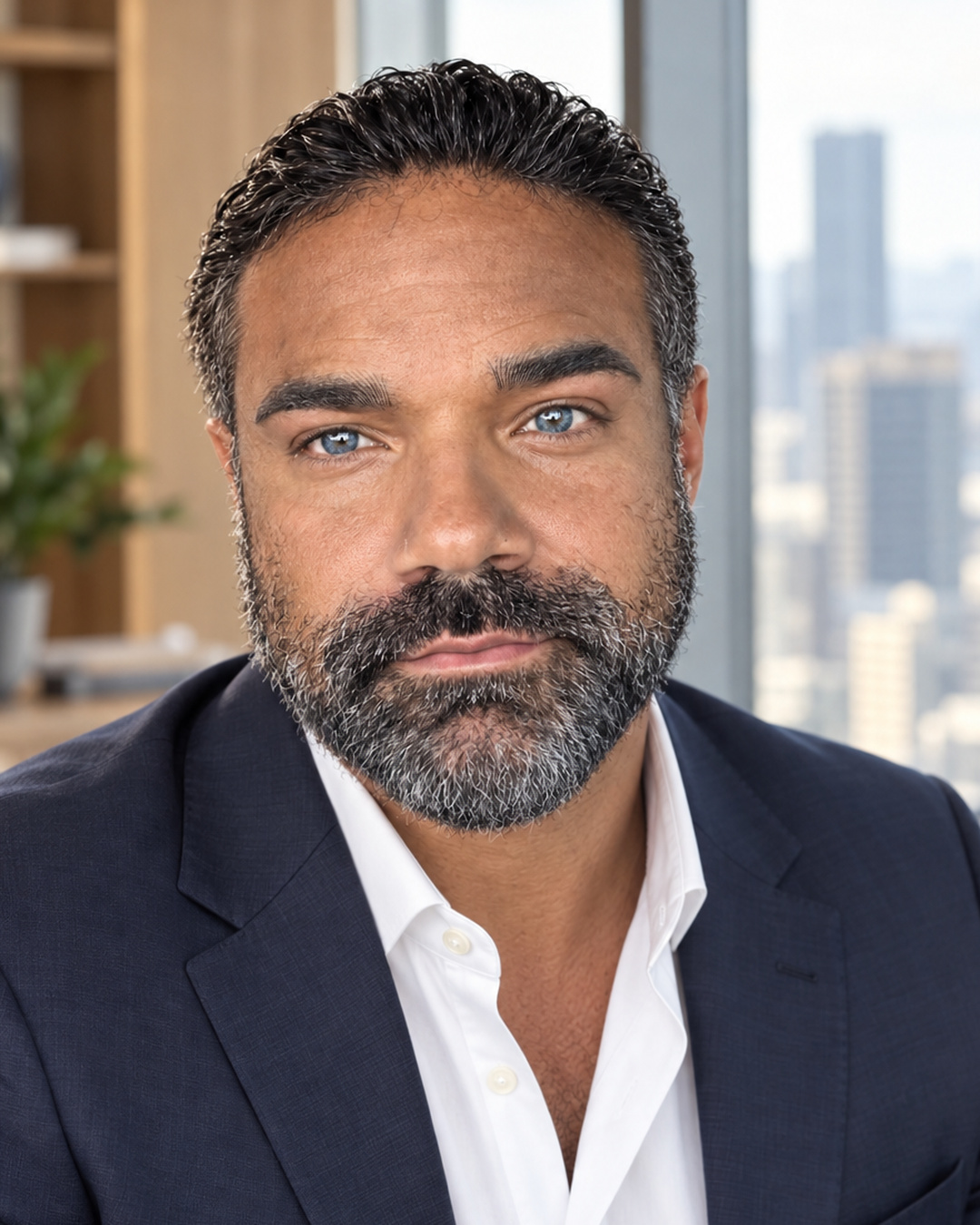 By José Vasquéz, Managing Partner
5 min read · Growth Equity
By José Vasquéz, Managing Partner
5 min read · Growth Equity
In this note05 · 5 min
The operating partner used to be a name on a slide: a former CEO who took board seats, gave a quarterly opinion, and collected a retainer for availability rather than output. That role is disappearing. In its place is an operator with a defined mandate, a comp structure tied to outcomes, and enough authority to be blamed when a plan misses. The shift is not cosmetic. It changes who is accountable for value creation inside a growth-stage company, and it forces every firm to answer a question it used to avoid: what, specifically, is the operating partner on the hook for?
That question is really about incentive design, not talent. A firm can hire the same caliber of operator under two structures — one where the person is paid to advise and another where the person is paid for a result — and get materially different behavior. The advisory model rewards presence. The accountability model rewards outcomes, which means it also has to tolerate an operator who says no to a management team, disagrees with a founder in front of the board, or walks away from an engagement that is not working. Firms that want the second kind of operator but keep the first kind of compensation structure are the ones most likely to be disappointed by the model.
01From advisory presence to accountable ownership
The advisory-era operating partner was deployed thinly across a portfolio: a few hours a month per company, generalist by necessity, valuable mostly for pattern recognition and a Rolodex. The role worked because expectations were modest. Nobody measured an advisor against a plan, because an advisor did not own a plan.
The embedded model inverts that. An operating partner is assigned to a narrow set of companies — often one — with a written scope: a specific function, a specific timeline, a specific metric they are accountable for moving. That operator sits closer to management than a board member does and further from day-to-day execution than an employee does, which is an uncomfortable position by design. It only works if the firm has been explicit, before the engagement starts, about what success looks like and who decides when the engagement ends.
02What the compensation structure actually reveals
Compensation is the tell. A firm that pays an operating partner a flat retainer regardless of outcome has, whether it says so or not, built an advisory relationship. A firm that ties a meaningful share of compensation to a specific operating outcome — a cost structure fixed, a commercial function stood up, a system implemented and adopted — has built an accountability relationship, and the operator will act accordingly. The three archetypes below are not interchangeable, and firms that blur them tend to get the behavior of the cheapest one regardless of what they are paying for.
| Archetype | Basis of compensation | Typical deployment | Who owns the outcome |
|---|---|---|---|
| Advisory board member | Flat retainer or equity grant, availability-based | A few hours monthly, portfolio-wide | Management, unambiguously |
| Functional executive-in-residence | Salary plus equity, time-bound | Full-time on one function at one company | Shared, with the operator carrying real exposure |
| Embedded operating partner | Base plus outcome-linked incentive tied to the engagement's stated metric | Full-time, one or two companies, defined scope | The operator, against a metric set in advance |
The middle and right columns are where most of the recent change has happened. Ten years ago, almost every operating partner sat in the left column. Today, growth equity and mid-market firms increasingly build the right column into how they underwrite a deal in the first place — not as an add-on service after close, but as a resourcing decision made during diligence.

03When an operator helps, and when an operator crowds out the team
An embedded operator earns their scope when the company has a real capability gap the founding team has not had time or reason to build — a commercial operating system, a clinical operations function, a finance stack that can support a larger company than the one that exists today. In those cases, the operator is additive: they build something and hand it to someone who will run it.
An operating partner who is still doing the job eighteen months in was never building capability — they were substituting for it.
The failure mode is the operator who becomes a permanent layer between the founder and the function, either because the management team was never given real authority to begin with or because the operator found it easier to keep doing the work than to build a team that could take it over. Both are governance failures, not personnel failures, and both are visible early if a firm is looking: an operator whose calendar is full of execution rather than coaching, and a functional leader on the management team who has stopped being asked for their opinion.
04Generalist bench or deep functional specialists
The second design choice a firm has to make is structural: build a small bench of generalist operators who rotate across the portfolio, or build deep specialists in the functions that matter most to the sector — clinical operations, market access and reimbursement, regulatory strategy, revenue cycle. Generalists are more flexible and cheaper to keep on staff between engagements. Specialists are slower to deploy and harder to keep utilized, but they arrive already knowing the specific failure modes of, say, a diagnostics company's path to reimbursement, rather than learning them on the clock.
In life sciences and healthcare specifically, the specialist case is stronger than in software, because the functions that break — regulatory, clinical, reimbursement — do not transfer well from a generalist operator's prior experience in an unrelated sector. A firm that tries to run a healthcare portfolio on a generalist bench is implicitly betting that operating skill is more important than domain knowledge. That bet is sometimes right. It is rarely right in the functions that determine whether a healthcare company can actually get paid for what it sells.

05What this means for how a firm underwrites operating support
The practical implication is that operating partner strategy is not a service-offering decision made after a deal closes — it is an underwriting decision made before one. A firm evaluating a target should be able to say, specifically, which functions are likely to need embedded support, what that support will be measured against, and how the engagement ends. Management teams evaluating a firm's operating model should ask the inverse: what happens to the plan, and to my authority, once your operator is in the building. The honest answer to that question tells a founder more about a firm's actual value-creation model than any slide describing the operating platform ever will.
Related reading: platform build-and-buy strategy covers the systems and finance function an operating team has to have in place before the second acquisition. building value beyond capital and operational infrastructure for growth-stage founders extend the accountability question to the rest of a company's infrastructure decisions.
Nothing in this piece is investment, legal, tax or accounting advice, and nothing in it is an offer to sell or a solicitation of an offer to buy any security.
Former Chairman of JumpStart Inc. He has founded, scaled and exited companies across media, nutrition, real estate and human-resources technology, and owned the revenue line in every one of them. What he brings to a position is that operating experience at scale, investment acumen, an advanced diligence capability, and technology and artificial-intelligence expertise. He invests the way he operated: inside the business, on the plan, alongside the management team.