
Emerging Growth Equity Managers: The Founder's Complete Evaluation Guide for 2025
How founders in life sciences, deep tech, and cleantech should evaluate emerging growth equity managers — track record, fund economics, GP skin-in-the-game, and red flags.
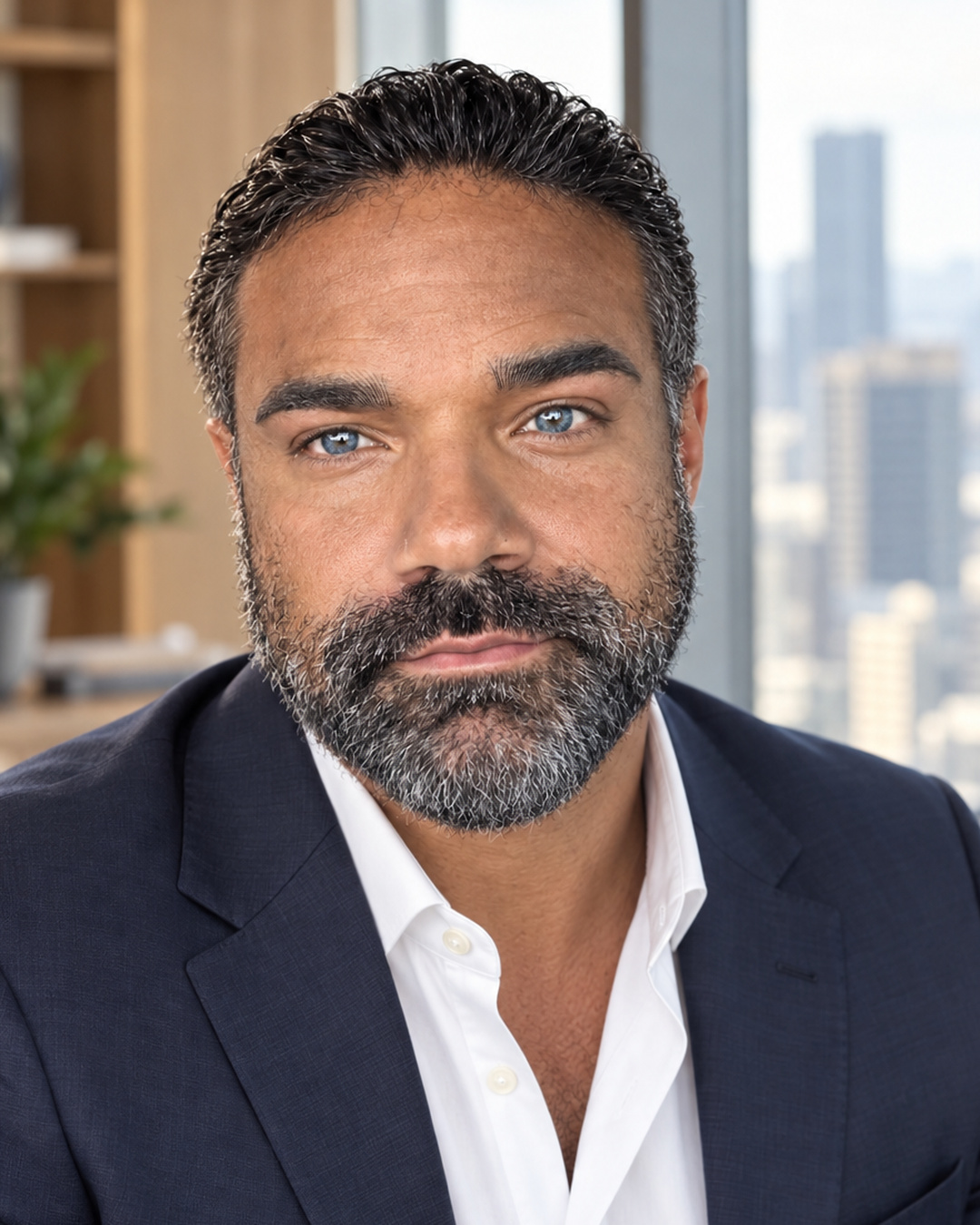 By José Vasquéz, Managing Partner
10 min read · Growth Equity
By José Vasquéz, Managing Partner
10 min read · Growth Equity
In this note08 · 10 min
- Emerging Growth Equity Managers: The Founder's Complete Evaluation Guide for 2025
- What Defines an Emerging Growth Equity Manager in 2025
- How to Evaluate Track Record Without a Full Fund Cycle
- Fund Economics: Fees, Carry, and GP Commitments You Should Expect
- Due Diligence Checklist: Operational and Team Red Flags
- Negotiation Levers for Anchor and Early LPs
- What Founders Need to Know Before Taking Emerging-Manager Capital
- Spin-Out Managers: Attributing Real Performance vs. Platform Effects
01Emerging Growth Equity Managers: The Founder's Complete Evaluation Guide for 2025
You're deep in a Series B process. Your lead candidate is a newly formed fund — smart partners, compelling thesis, and a term sheet that looks clean. But the fund is on its first vehicle, the partners spun out of a megafund eighteen months ago, and you can't find a single portfolio company CEO who actually worked with them when they were writing checks independently. That is the exact scenario where founders get the capital decision wrong. Emerging growth equity managers are not just smaller versions of established funds — they carry a structurally different risk profile, a different incentive architecture, and a fundamentally different ability to support you when things get hard. Here is the framework to evaluate them honestly.
02What Defines an Emerging Growth Equity Manager in 2025
The definition has shifted. In 2020, "emerging manager" effectively meant Fund I or Fund II with under $150M AUM. In 2025, the label covers a wider band: spin-outs from multi-billion-dollar platforms, sector-specialist firms launching their second vehicle after a strong first fund, and former operators raising institutional capital for the first time. PitchBook's 2024 private equity data shows that first- and second-time fund managers accounted for roughly 18% of all new private equity vehicles closed globally — a meaningful share, concentrated heavily in growth equity and venture.
What these managers share is a common structural constraint: limited institutional infrastructure, a fundraising track record that is either absent or incomplete, and a dependency on a small number of people to simultaneously raise capital, source deals, execute diligence, and manage existing portfolios. That concentration of human capital is not automatically bad — it often produces sharper focus and better founder alignment — but it is the central variable you need to stress-test.
For founders in life sciences, deep tech, and cleantech specifically, the emergence of sector-specialist growth funds is a genuine structural development. Generalist mega-funds have retreated from early-growth life sciences in the $15M–$50M check range as their fund sizes have scaled past the point where those positions move the needle. That vacuum has been filled almost entirely by emerging managers — which means for many founders in our categories, an emerging manager is not a fallback option. It is often the only institutional option at the right check size.
03How to Evaluate Track Record Without a Full Fund Cycle
This is where most founders stop too early. They hear "no DPI yet" and either dismiss the manager or accept the risk without a framework. Neither response is correct.
When a manager lacks a full fund cycle, you are evaluating inputs rather than outputs. The most useful input signal is deal-level attribution: which specific investments did this GP source, lead, and govern — independently — and what has happened to those companies since? Ask for a deal-by-deal attribution memo. Any serious manager should be able to produce one. What you are looking for is not a list of logos. You want to see: initial entry valuation, current carrying value or exit multiple, board seat held (yes or no), and a named reference at each company — the CEO or CFO who worked with this person directly.
Scoring the Attribution Memo Quantitatively
Build a simple scoring grid across four dimensions. First, ownership of the relationship: did they source it, or was it a platform-generated deal passed to them? Second, governance depth: did they hold a board seat, serve as observer only, or have no formal role? Third, follow-on conviction: did they write a check in the next round from their own fund or from a discretionary co-invest vehicle? Fourth, outcome trajectory: is the company growing revenue faster than the entry-year multiple implied, flat, or deteriorating? Score each deal 0–3 on each dimension. A manager with eight attributed deals averaging above 2.0 across all four dimensions has a credible foundation, even without DPI.
The TVPI number matters less than founders typically assume at this stage. A first-fund manager three years into a five-year investment period will show paper marks that are largely at cost or modest step-ups. What you want to see is a TVPI-to-cost ratio that is expanding — not because of aggressive marking, but because subsequent financing rounds from credible co-investors have validated the entry thesis. Ask what percentage of the portfolio has received follow-on financing from independent third parties. If the answer is below 60%, that is a signal worth probing.
04Fund Economics: Fees, Carry, and GP Commitments You Should Expect
As a founder, you might wonder why fund economics are your problem. They are your problem because fee and carry structures directly shape how your investor behaves inside your company. A manager running a high-management-fee structure on a small fund has aligned their personal economics toward fee income rather than carry — which means their incentive to mark aggressively, avoid difficult board conversations, and hold positions too long is structurally elevated.
For growth equity funds in the $100M–$350M range in 2025, market-standard economics look like this: 2% management fee on committed capital during the investment period, stepping down to 1.5% or 1.25% on invested capital during the harvest period; 20% carried interest with an 8% preferred return hurdle; and a GP commitment of 2%–3% of fund size. First-time managers sometimes attempt to raise at these terms but often need to concede on one axis — typically stepping fees down to 1.75% or offering a lower carry percentage in exchange for a larger GP commit.
The GP commitment number is the most operationally honest signal available to you as a founder. A 2023 Preqin analysis of private equity fund terms found that GPs who committed 3% or more of fund capital showed meaningfully lower rates of underperformance relative to stated benchmarks. The mechanism is straightforward: a GP with $5M of personal capital in a $175M fund is managing their own retirement alongside yours. A GP with $500K in the same fund has a very different risk tolerance when the board faces a down-round decision.
If a manager cannot articulate exactly where their GP commit came from — personal liquidity, recycled carry from a prior fund, or a third-party loan — push harder. GP commits funded primarily by fund-level loans secured against the fund's own assets are not meaningfully aligned capital, and some jurisdictions have begun flagging this structure in LP disclosure requirements.
05Due Diligence Checklist: Operational and Team Red Flags
Operational infrastructure is where promising emerging managers most frequently fail. Not on deal quality — on back-office execution that cascades into reporting failures, LP defaults, and ultimately distraction from portfolio support. As a founder, a manager distracted by fund administration problems is a manager who is not returning your calls when you need a bridge extension signed.
The checklist that matters: Does the fund have an independent fund administrator (not self-administered)? Is the audit being conducted by a recognized mid-market accounting firm with a dedicated private funds practice? Is the fund counsel a recognized private funds legal team, or a generalist firm that also does residential real estate closings? Does the manager have a dedicated CFO or COO, or is one of the investment partners doubling as the back office?
SEC Staff Bulletin No. 2023-5 on investment adviser compliance reinforced that registered investment advisers — which most growth equity managers above $150M AUM are required to be — must maintain documented compliance policies that are actually followed, not just filed. Ask to see the compliance calendar. A manager who cannot produce one quickly either does not have one or does not know where it is. Either answer is informative.
On the team side, the single most predictive red flag is a key-person concentration risk with no articulated succession or coverage plan. If one partner sources 80% of deals and that partner is also leading fundraising for Fund II while managing five board seats, the math on available attention is not favorable to any portfolio company CEO who needs active support.
06Negotiation Levers for Anchor and Early LPs
If you are a founder who has the opportunity to come in as a limited partner — directly or through a vehicle — alongside a growth equity manager you believe in, the anchor LP position carries real negotiating currency that most founders do not use.
The three levers that move: Most Favored Nation (MFN) clauses, co-investment rights, and advisory board seats. An MFN clause in a side letter ensures that if the GP grants any subsequent LP more favorable economic terms, your terms automatically match. In a first-time fund still placing capital with new LPs after you close, this protection is material. Co-invest rights give you the ability to participate pro-rata (or sometimes uncapped) in individual deals outside the fund at zero management fee and often zero carry — compounding your exposure to the specific companies you have the highest conviction on. Advisory board seats provide direct visibility into fund governance, including fee calculations, valuation methodology, and any conflicts of interest that arise.
Founders who are also operating companies sometimes have a fourth lever that is underused: anchor LP status in exchange for a formal research or commercial partnership that gives the fund differentiated deal flow or technical diligence capability in your sector. For a life sciences or deep tech focused fund, a formal scientific advisory relationship with a portfolio company can be worth more to the fund's LP pitch than a pure economics concession.
07What Founders Need to Know Before Taking Emerging-Manager Capital
Beyond evaluating the manager, you need to evaluate what their capital structure means for your company's future rounds. Three questions that matter more than most founders ask.
First: What is the fund's reserve ratio and how is it enforced? An emerging manager with a $175M fund who writes you a $12M Series B check needs to have reserved at least another $10M–$15M for your Series C participation — otherwise, a flat or down-round will trigger a pro-rata decision they cannot support, and you will be signaling to the market that your lead did not follow on. Ask to see the reserve policy in writing, not just as a verbal commitment.
Second: What is the fund's vintage-year capital deployment pressure? A manager who raised in 2022 and has a standard five-year investment period is approaching the back half of their deployment window. They may be writing checks faster than their diligence quality supports, or alternatively, sitting on dry powder they are reluctant to deploy because the entry valuations no longer support their return targets. Either dynamic affects you differently, but both are worth understanding before you sign.
Third: Does the manager have established relationships with the institutional crossover and late-growth investors who will lead your next round? A growth equity manager who has no co-investor network outside a handful of other emerging managers cannot provide the warm introductions that make a Series C process competitive. Ask directly: who are the three most recent co-investors in your portfolio, and can I call them?
08Spin-Out Managers: Attributing Real Performance vs. Platform Effects
The most difficult evaluation scenario is the spin-out manager — a partner or team departing a large established fund and raising their own vehicle on the basis of deals made at the prior firm. The prior firm's performance is real, but the attribution question is genuinely hard, and some managers exploit its ambiguity aggressively.
Platform effects at large growth equity funds are substantial and underappreciated. A senior partner at a $3B fund has a dedicated deal-sourcing team, a portfolio operations group, a capital markets desk facilitating IPO access, and a brand that opens doors with bankers and management teams. When that partner moves to a $200M independent fund, all of those inputs disappear simultaneously. The question is not whether they made good decisions at the prior fund — it is whether their good decisions were primarily the product of individual judgment or primarily the product of institutional infrastructure that no longer exists.
The test: take the deals they claim in their attribution memo and ask specifically what the entry sourcing looked like. Did the opportunity come through the firm's dedicated corporate development relationship, a sell-side banking process where the prior firm's brand was determinative, or a proprietary channel the individual developed independently? Harvard Business Review's analysis of private equity GP transitions highlights a consistent pattern where deal attribution at large platforms is systematically claimed more broadly by departing partners than the underlying data supports. Ask for co-investors from those deals who can speak specifically to the individual's role — not the firm's role — in structuring terms, supporting the company, and navigating difficult governance moments.
The spin-out managers who have earned their attribution are identifiable. They sourced deals that were not on the firm's formal pipeline. They took board seats on smaller, less-glamorous investments where no senior partner wanted the seat. They pushed for follow-on investments the IC initially rejected. Those are the signals of independent judgment that will transfer to a new vehicle. Everything else is brand inheritance, and brand does not compound past Fund I.
The capital decision you are making when you take a term sheet from an emerging growth equity manager is not just a financing decision. It is a governance decision that will affect every board conversation, every bridge round, every strategic pivot, and every subsequent fundraise you run for the next five to seven years. The managers worth backing in 2025 are the ones who can show you exactly what they built independently, who will answer the GP commitment question without hesitation, and whose back-office infrastructure is boring enough to stay invisible. The ones who cannot clear that bar are not early in their journey — they are telling you something important about how they will behave when your company needs them most.
Nothing in this piece is investment, legal, tax or accounting advice, and nothing in it is an offer to sell or a solicitation of an offer to buy any security.
Former Chairman of JumpStart Inc. He has founded, scaled and exited companies across media, nutrition, real estate and human-resources technology, and owned the revenue line in every one of them. What he brings to a position is that operating experience at scale, investment acumen, an advanced diligence capability, and technology and artificial-intelligence expertise. He invests the way he operated: inside the business, on the plan, alongside the management team.