Family Office Guide to Emerging Growth Equity Managers
A practical framework for family offices evaluating first-time and early-fund growth equity managers: what to check, what to ignore, and the red flags that matter most.
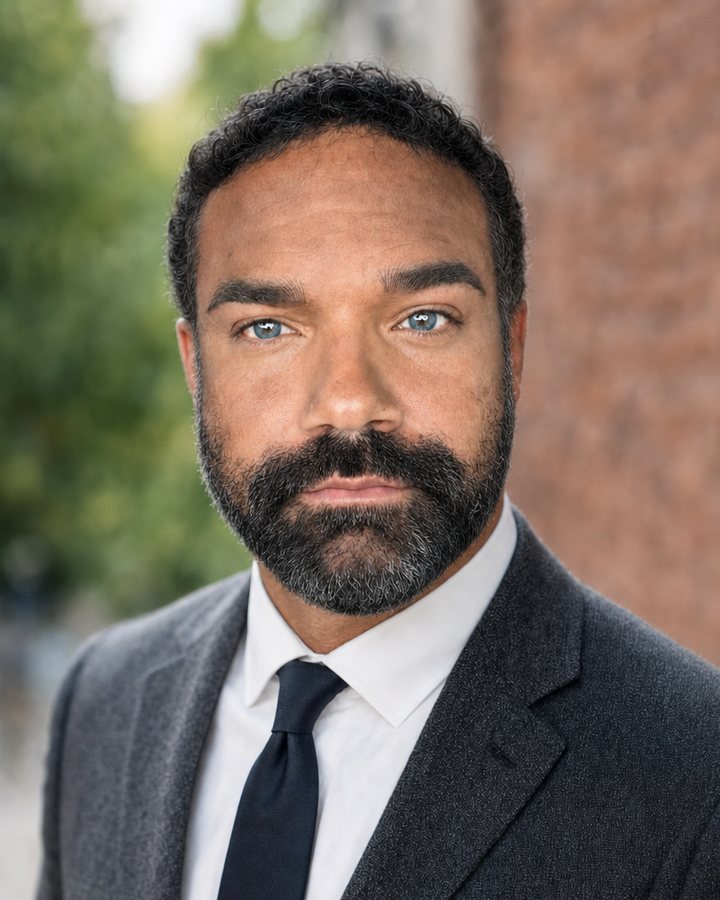 By José Vasquéz, Managing Partner
9 min read · Private Equity
By José Vasquéz, Managing Partner
9 min read · Private Equity
In this note06 · 9 min
- Why family offices are backing emerging managers at all
- The five-point emerging manager evaluation framework
- Red flags in an emerging manager's pitch
- Why sector specialists often underwrite better at the growth stage
- Building emerging manager diligence into an allocation process
- Frequently asked questions
A family office that backs an emerging manager is underwriting a firm before the firm has finished proving itself. The working definition is narrow. Callan, for example, defines an emerging manager as a firm raising its first, second, or third institutional fund, with a fund size between $50 million and $1 billion. That band holds some of the most focused investors in private markets and some of the least durable. This guide shows how to tell them apart, from the operator's side of the table.
01Why family offices are backing emerging managers at all
Part of the answer is the size of the sleeve. J.P. Morgan's 2026 Global Family Office Report surveyed 333 single-family offices from 30 countries with an average net worth of $1.6 billion. Their portfolios held almost 40% in public equities, 35.5% in alternatives and a little less than 15% in fixed income. An alternatives allocation of that weight is hard to fill with flagship funds alone, and family office investing teams can often take manager risk a pension committee would not.
The other part is where everyone else is putting their money. Bain's 2026 Global Private Equity Report found that the number of funds closed fell 18% for the industry as a whole and 23% for buyout in 2025, a fourth straight year of decline, and that the liquidity squeeze is reinforcing a trend for LPs to gravitate to the largest, established GPs. Venture shows the same shape: the Q2 2026 PitchBook-NVCA Venture Monitor reported a sharp fundraising rebound, though commitments remained concentrated among a small group of established managers.
When institutions crowd into the same names, an early backer of a newer firm can have more leverage on allocation size, co-investment access and governance. None of that matters if the manager is not good.
02The five-point emerging manager evaluation framework
A first or second fund rarely has enough realized history to carry a decision on its own, so diligence has to rest on evidence that existed before the fund did. Five tests cover most of it.
1. Operating pedigree, attributed to individuals. Ask who did what, at which company, with what result, and who will confirm it. Callan's process includes a quantitative attribution analysis of the team's track record, verifying cash flows and performance, and notes that new teams typically bring 5 to 10 years of institutional asset management experience executing a strategy similar to the one they intend to run. Treat the operating partner private equity title as a claim to test, not a credential. A principal who led a commercial launch, a reimbursement strategy or a manufacturing scale-up should be able to name the board, the numbers and the people who were in the room. For how that role has shifted, see how operating partners moved beyond advisory to value creation.
2. A sourcing edge you can trace. "Proprietary deal flow" is an assertion; a sourcing edge is a mechanism. The credible version names the channel, such as a physician network or a health system's innovation office, then shows where the last twenty opportunities came from and why each was won, lost or passed. Callan places significant emphasis on analyzing the individuals who sourced the transactions, because deal flow is what a new firm lives on. Call two founders the manager turned down, not only the ones it backed.
3. Sector discipline. A narrow mandate forces a manager to be excellent at one thing. Read the pipeline against the stated thesis. If a healthcare fund's recent diligence list includes consumer software and logistics, the thesis is decoration.
4. Check-size and stage discipline. Fund size should follow from strategy, not the reverse. Divide the fund by the planned number of core positions, hold back a reserve for follow-ons, and see whether the resulting check fits the companies the manager says it targets. A growth strategy aimed at commercial-stage companies but sized for twenty positions will either write checks too small to earn governance rights or drift toward earlier, riskier rounds. The same arithmetic applies in mid market private equity, where an operational-improvement thesis needs enough ownership to carry out. Credible growth equity firms at this stage have already done that math.
5. Structural transparency. A strong emerging manager can explain in plain language who sits on the investment committee, how conflicts are handled, how each position is valued every quarter and what the reporting package will contain. Industry standards make this easy to test. ILPA's Emerging Manager Toolkit bundles a model LPA, the ILPA due diligence questionnaire, quarterly reporting standards, a fee template and ILPA Principles 3.0, and is designed to build trust, transparency and alignment between LPs and GPs. A manager that resists completing the DDQ in full has already answered an important question.
03Red flags in an emerging manager's pitch
- Sourcing claims with no names. If the manager cannot describe where its last several deals came from without retreating to "relationships," assume its deal flow is the same as everyone else's.
- A track record made of marks. Unrealized value is an estimate, and weak positions can sit near cost for years. Bain counts 32,000 unsold companies worth $3.8 trillion across private equity, with buyout holding periods at exit around seven years and distributions to LPs flat at 14% of net asset value in 2025. In that market, ask for realized and unrealized results separately, cash flows by deal and the valuation policy behind every mark.
- Selectively presented history. For SEC-registered advisers, the Marketing Rule, Rule 206(4)-1 under the Investment Advisers Act, bars an advertisement from showing gross performance unless it also presents net performance, restricts extracted results unless the total portfolio's results are provided or offered, and permits predecessor performance only with appropriate similarity in personnel and accounts. A small first fund may sit outside that regime. An adviser that solely advises private funds with less than $150 million in U.S. assets under management can rely on the private fund adviser exemption and report as an exempt reporting adviser, which is not subject to many of the substantive requirements registered advisers face. That is no judgment on the manager, but it moves the burden of checking onto the allocator.
- Sector-hopping. A first fund pitched as healthcare, a prior vehicle in fintech and a pipeline that includes both suggests the thesis follows whatever is easiest to raise.
- Operating claims that cannot be verified. "Former operator" should come with titles, dates, companies and references who will speak to outcomes. A principal who advised a company is not the same as one who ran its P&L.
04Why sector specialists often underwrite better at the growth stage
In life sciences and healthcare, the risks that sink growth-stage companies are frequently technical and regulatory rather than purely commercial. Does a device's clearance support the claims the sales team wants to make? Does a diagnostic have coverage and payment behind it, or only a code? Will a digital health product's clinical evidence satisfy a health system's procurement committee? A generalist hires consultants to answer those questions deal by deal. A specialist has usually lived through them and knows which answers to distrust.
That depth changes three things a family office cares about. It ends diligence earlier on the wrong deals. It improves post-investment support, because the help a company needs, such as payer strategy, quality systems or clinical operations, is specific. And it makes the manager easier to evaluate: a narrow thesis produces a pipeline, a reference list and a set of passed deals that can be checked against it. The trade-off is concentration. A specialist fund is a sector bet as well as a manager bet, and that belongs in portfolio sizing, not only in the diligence memo.
Market conditions sharpen the point. When venture rounds tighten, companies that once would have raised another large preferred round look for growth capital instead, a shift explored in what the VC market reset means for growth equity investors. A specialist can separate a sound company caught in a funding gap from one whose data never supported the next round. Founders run a mirror-image version of this diligence, outlined in a founder's guide to evaluating emerging growth equity managers.
05Building emerging manager diligence into an allocation process
- Set the budget before the meetings. Decide the share of the private markets allocation for newer managers, and the per-manager maximum, before any pitch. Allocations sized in the room tend to follow charisma.
- Use existing managers as a reference network, not a filter. Established GPs, co-investors and portfolio company executives can confirm or contradict a new team's account of its past deals.
- Run the same file on every manager. Apply the five tests, the ILPA DDQ and the same reference protocol to a brand-name re-up as to a first-time fund. Consistency stops brand from standing in for evidence.
- Start with a co-investment where one is available. Watching a manager source, diligence, negotiate and report on a single deal is the most direct test of the framework, and costs far less than a full commitment if the answer is no.
- Write down what would justify a re-up. At commitment, agree internally on the evidence a second fund would require: realized outcomes, reporting quality, team stability and thesis consistency. A Fund II decision made on Fund I marks repeats the problem this guide began with.
A family office cannot outbid the largest institutions for space in the largest funds. It can out-diligence them on managers they are not yet looking at, and that is a capability worth building on purpose.
06Frequently asked questions
What is an emerging manager in private equity?
There is no single legal definition. Most allocators use the term for a firm raising its first, second, or third institutional fund, and Callan adds a fund size between $50 million and $1 billion. Emerging managers typically have smaller teams, a short firm-level history and principals whose prior results were earned at other firms or operating companies, which is why attributing that history to individuals sits at the center of diligence.
How do family offices evaluate emerging growth equity managers?
Because a newer firm has little realized history, the review leans on evidence that predates the fund: the team's operating and investing record attributed to individuals, a sourcing edge that can be traced deal by deal, discipline within a stated sector, check sizes that fit the strategy, and plain answers on governance, valuation and reporting. Reference calls with founders, co-investors and passed-on companies test each point.
What track record can a first-time growth equity fund show?
A first-time fund usually presents its principals' deals from earlier firms, personal investments or operating roles. Allocators should ask for deal-level cash flows, realized and unrealized results shown separately, gross and net figures, and confirmation of who sourced and led each deal. SEC-registered advisers must show net performance alongside gross under the Marketing Rule, while smaller exempt reporting advisers are not subject to many of those requirements.
Why do some family offices prefer sector-focused emerging managers?
A manager with deep expertise in one sector, such as life sciences and healthcare, can judge technical, clinical, regulatory and reimbursement risk that a generalist would have to outsource. That usually means better-informed diligence and more specific operating support after the investment. The trade-off is concentration: a specialist fund is a sector bet as well as a manager bet, so commitment sizing should reflect both.
What red flags should allocators watch for in an emerging manager pitch?
The most common are sourcing claims that cannot be traced to specific deals, a track record resting mainly on unrealized marks, gross returns shown without net returns, selectively extracted deals, thesis drift across unrelated sectors, and operating credentials that cannot be confirmed with titles, dates and references. Reluctance to complete a standard due diligence questionnaire, such as the ILPA DDQ, is another warning sign.
How much of a family office portfolio typically goes to alternatives?
In J.P. Morgan's 2026 Global Family Office Report, which surveyed 333 single-family offices with an average net worth of $1.6 billion, alternatives made up 35.5% of portfolios, alongside almost 40% in public equities and a little less than 15% in fixed income. Individual offices vary widely depending on their return targets, liquidity needs and time horizons.
Nothing in this piece is investment, legal, tax or accounting advice, and nothing in it is an offer to sell or a solicitation of an offer to buy any security.
Former Chairman of JumpStart Inc.