Operator-Led vs. Financial-Sponsor Growth Equity: What an Operating Partner Changes for LPs
Two models of growth capital get lumped together as "private equity." This piece separates operator-led from financial-sponsor growth equity and what the difference means for LPs.
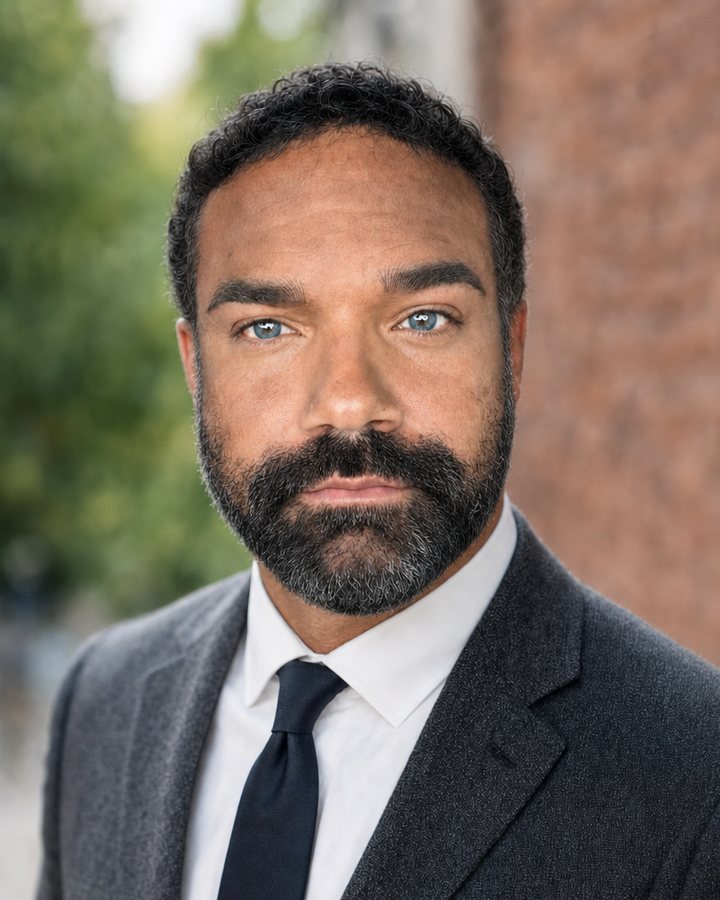 By José Vasquéz, Managing Partner
8 min read · Growth Equity
By José Vasquéz, Managing Partner
8 min read · Growth Equity
In this note06 · 8 min
Almost every growth investor promises "value creation," so the phrase has stopped carrying information. The more useful distinction is structural. In one model, principals and each operating partner spend real time inside portfolio companies working on the operating plan. In the other, the firm contributes capital, governance and financial expertise and leaves execution to management. Both are legitimate ways to run growth capital. They carry different risks, different cost structures and different sources of return, and anyone evaluating growth equity firms should know which one they are underwriting.
01Two models of growth capital
Start with where growth equity sits. The growth equity vs private equity distinction is mostly about the company and the check: growth investors typically back companies that are past product risk and scaling revenue, often take minority or non-control positions, and use little or no acquisition debt, while buyout funds take control and rely on leverage. Within growth equity, managers organize themselves in two broad ways.
The financial-sponsor model pairs capital with governance. The firm takes one or two board seats, installs reporting discipline, helps with capital structure, add-on acquisitions and the eventual exit, and relies on the founder and management team to run the business. Value creation leans on selecting the right company at the right entry price, structuring protections into the security, and selling into a market that pays a higher multiple than the one paid at entry. When diligence and pricing are strong, this is an efficient model: lean teams, many companies per partner, modest overhead.
The operator-led model pairs capital with principals who have run businesses themselves and who spend meaningful time on the plan itself: pricing, go-to-market design, key hires, manufacturing scale-up or reimbursement strategy, and the order in which they happen. Governance still exists, but the board seat is the smaller part of the job. The model costs more to staff, supports fewer companies per partner, and puts more weight on the judgment of specific people.
02What an operating partner actually does in an operator-led firm
The operating partner private equity firms list on a team page can be anyone from a full-time former chief executive to a retired executive on a light advisory retainer, so the title alone tells an allocator very little. (For background on how the role has changed, see this look at the evolution of the operating partner.) Four markers separate a genuinely operator-led firm from a financial sponsor with operating-sounding language:
- Direct profit-and-loss or founder experience. Principals who have carried a revenue number, run a plant, or taken a product through a regulatory pathway, not only advised someone who did.
- Involvement in go-to-market and hiring decisions. Operators help design the sales motion and interview the head of sales; sponsors vote on the budget that pays for the hire.
- Presence before close, not only after. The people who will work with the company help build the operating plan during diligence, so the investment thesis and the first-year plan come from the same hands.
- Time allocation that can be counted. Days per month inside portfolio companies, per operating partner, across the portfolio. A firm that cannot produce that number is telling you something.
The trade-off is real. Hands-on investors can crowd out a capable management team, and a model built around a few operators concentrates key-person risk. The stronger operator-led firms define where they lead, where they support, and where management decides alone, and they treat operating help as a capability that has to be built and measured rather than a slogan.
03Where the data points
The case for operating capability is not that operators are better investors. It is that the arithmetic of private equity returns has changed. Bain's Global Private Equity Report 2026 says that low prices, cheap debt and easy multiple expansion are gone for the foreseeable future. In the low-rate era, Bain notes, rising multiples powered over 50% of all buyout returns, and a typical investment needed just 5% annual EBITDA growth to reach a 2.5x multiple on invested capital over a five-year hold.
Today, Bain estimates, typical deals require around 10% to 12% average annual EBITDA growth to generate the same 2.5x return over five years, a rule of thumb it calls "12 is the new 5." The same release reports that buyout holding periods at exit now hover around seven years, up from five to six years between 2010 and 2021, and concludes that attractive returns now require significantly more operational improvement and revenue growth. It adds that firms' costs are rising with heavy investment in specialized sector expertise, capabilities, technology and talent.
Those figures describe buyouts, and growth deals use far less debt. The direction still applies to growth capital, because leverage was never its main lever to begin with. If a manager cannot count on selling at a higher multiple than it paid, the plan has to make the company materially larger or more profitable during the hold, and someone has to do that work.
LPs want to know—really—what your strategy is, why it works now, and how you can prove out your repeatable edge.
Bain, Global Private Equity Report 2026
Healthcare shows the same pattern. Bain's 2026 healthcare report found that global healthcare private equity set a record in 2025, with more than $190 billion in estimated deal value, and it names the importance of operational sophistication among the year's themes. Medtech deal value nearly doubled to an estimated $33 billion, and Bain notes the segment is gaining momentum as investors see opportunities to deploy proven value-creation playbooks. A playbook is only as useful as the people who have run it before.
04How to tell which model fits a company's stage
Neither model is right for every company, and a manager's model should match the companies it targets. In life sciences and healthcare, a practical heuristic:
- Founder-controlled, technically complex, roughly $10 million to $30 million in revenue. The constraint is usually execution rather than governance: building a commercial team for the first time, moving from early adopters to a reimbursed product, scaling manufacturing, or professionalizing quality systems. These companies benefit most from people who have done those specific things under the same regulatory conditions.
- Larger, commercially mature, with a seasoned executive team. The constraint shifts toward capital allocation, acquisitions, financing and exit positioning. A financial sponsor's capital-markets depth may add more than another operator in the room.
- Everything in between. Ask what the next three years require. If the plan depends on things management has never done, operating help is worth its cost. If it depends mainly on capital and discipline, a lighter model is more efficient.
This is also where mid market private equity and growth equity overlap. Companies too large for venture-sized checks but too founder-controlled for a control buyout often need capital and hands-on help at the same moment. A review of the growth equity firms active in life sciences shows how differently managers answer that need.
05Questions LPs should ask about a manager's operating partner model
Many family offices do not run this diligence alone. J.P. Morgan's 2026 Global Family Office Report, drawn from 333 single-family offices, found that about 8 in 10 families outsource some part of their investment portfolio, and 51% cited "track record of performance and investment discipline" as a top motivation for working with external advisors. Whoever does the work, a track record shows what happened. These questions test why it happened:
- Are operating partners full-time or advisory? Ask for time allocation per company and how operating partners are compensated, including whether they share in carried interest. Economics reveal commitment more reliably than titles.
- Is the operating experience sector-specific? A former software sales leader and a former medical device commercial leader both have go-to-market experience. Only one has worked through hospital value analysis committees and reimbursement coding.
- Who writes the value creation plan, and when? If operators first meet a company after closing, the plan was underwritten by people who will not execute it.
- Can the manager attribute value to its sources? Ask for a value bridge on realized investments that separates revenue growth, margin change, multiple change and structural effects. A manager claiming operational value creation should be able to show it company by company, not only in aggregate.
- Who bears the cost of the operating team? Ask whether it sits with the management company, the fund or portfolio companies, and how that is disclosed.
- What happens when operators and management disagree? The answer shows whether the firm governs its own involvement.
The difference between operator-led and financial-sponsor growth equity rarely shows up in a firm's name or strategy slide. It shows up in calendars, compensation and value bridges. An allocator who asks for all three will know which model is being underwritten, and whether it fits the companies the manager intends to back.
06Frequently asked questions
What is the difference between operator-led and financial-sponsor growth equity?
A financial-sponsor growth equity firm contributes capital, board governance, financial discipline and help with financing, acquisitions and exits, while management runs the business. An operator-led firm adds principals or full-time operating partners who have run companies and who work inside portfolio companies on the operating plan itself, such as go-to-market, pricing, key hires and scaling. The models differ in cost, depth of involvement and expected sources of return.
What does operator-led mean in private equity?
It means the firm's principals or dedicated operating partners have run businesses themselves, carrying a profit-and-loss statement, building commercial teams or scaling operations, and apply that experience hands-on in portfolio companies. The test is the work, not the title: involvement in go-to-market and hiring decisions, participation in diligence before closing, and measurable time spent inside companies rather than only at board meetings.
Do operator-led growth equity firms outperform traditional financial sponsors?
There is no settled answer, and results depend on execution at each firm. What has changed is the return arithmetic. Bain estimates that typical buyouts now need about 10% to 12% annual EBITDA growth to earn a 2.5x return over five years, compared with about 5% in the low-rate era. That makes operational improvement more important for every manager, whichever model it follows.
How can LPs evaluate a manager's operational value creation claims?
Ask whether operating partners are full-time or advisory and how they are paid, whether their experience is specific to the sector, and whether they help build the plan before closing. Then request a value bridge for realized investments that separates revenue growth, margin change, multiple change and structural effects. Claims of operational value creation should hold up company by company, not only in aggregate.
Why do growth equity firms hire operating partners?
Mainly because multiple expansion and cheap debt can no longer be counted on. Bain's 2026 private equity report says attractive returns now require significantly more operational improvement and revenue growth, and that firms face rising costs for specialized sector expertise, capabilities, technology and talent. Operating partners are one way a manager builds that capability in-house instead of relying on portfolio management teams alone.
Nothing in this piece is investment, legal, tax or accounting advice, and nothing in it is an offer to sell or a solicitation of an offer to buy any security.
Former Chairman of JumpStart Inc.